

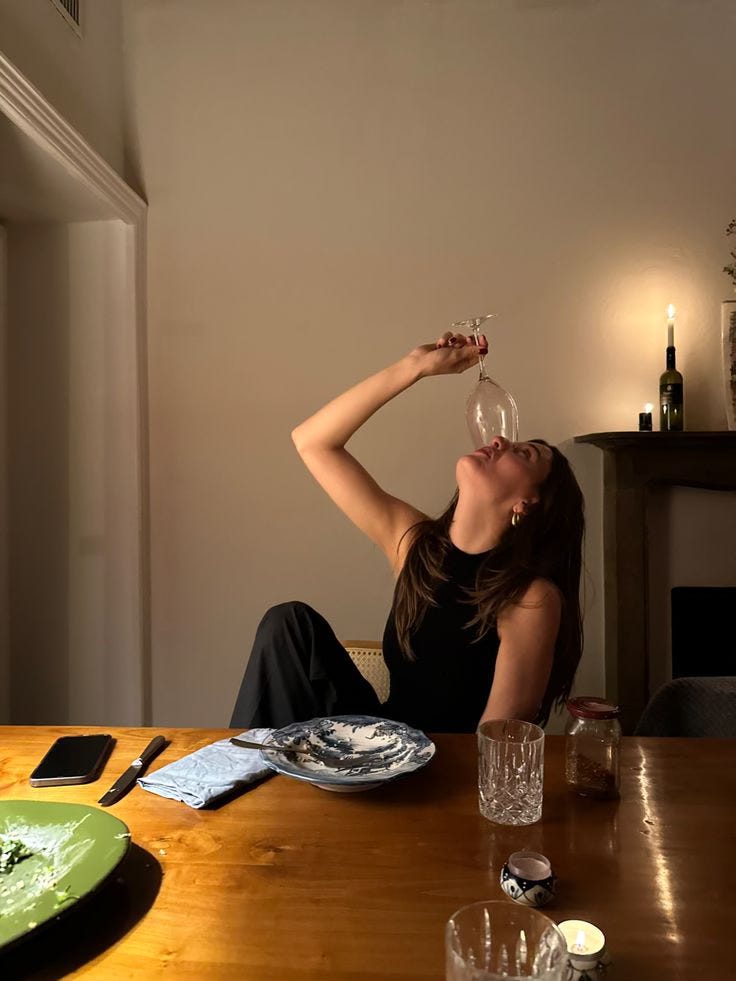
The whole world is kind of breaking up with wine right now, lowest it's been since 2000. Except here. Southeast Asia is quietly falling for it. So I went digging into how you even become one of those wine people who can swirl a glass and just know, and found out the fancy word for them literally started as the guy who carried the luggage.
Writing this from a cafe with a garden, open concept, so breezy. Had a flu for a couple of days but being out here is so good, having the sun actually touch your skin after being stuck inside. Also might I add the World Cup finals are coming. I was rooting for France and England and neither of them made it, so honestly the bronze fight is the most fun for me now, eh.
Speaking of. I’ve been on a wine roll these past few months. I’ve never been a wine person before but somehow it grew on me. My palate keeps changing too, started from never liking wine, to liking dry white, to now, give me a sweet red with my steak or a grilled chicken thigh (yes, gym food and wine same plate, best of both worlds baby). I’m not saying I’m a wine expert by any means, I just like what I like (the girl cant even name more than 5 types of wine for gods sake), not to mention I’m seeing a rise of natural wine bars poppin up in Bali. But I always find people who can taste a wine and actually tell you the difference so amazing. They’re the cool kids. I wanna be them.
Wait, the word “sommelier” means WHAT
So I went down a rabbit hole. And the first thing that made me laugh is the word itself. Sommelier. Sounds fancy right, sounds like something you whisper in a dark restaurant. Nope. It comes from an old French word, saumalier, for the guy who drove the pack animals, the donkeys hauling stuff around, from the Latin sauma, which literally meant the load a beast of burden carries. Like. Beast of burden energy. And it gets funnier, because for a while a sommelier was just the person who moved the French royal court's luggage when they traveled, Louis XIV era and everything, and only around the 1680s did it finally become the wine guy, basically a fancy butler. So the cool kids I wanna be? Their whole title started as the person carrying everyone's bags. I think about that every time I watch someone swirl a glass like it weighs nothing.
Ok so how do you actually become one
Anyway I got curious how you actually become one, and ok, it’s a lot. Turns out there are two totally separate ladders and the serious people climb both. One is WSET, the bookish one, four levels of knowing wine, how it’s made, why it tastes like that, taught in like 70+ countries. The other is the Court of Master Sommeliers, which is the restaurant floor one, the blind tasting, the serving, the running of an actual wine list. Most people who take it seriously end up with a bit of both.
And the top? Brutal. Fewer than 300 people in the entire WORLD hold the Master Sommelier diploma, the count sits around 291 to 299 right now. The theory part of that final exam passes about 1 in 10. The baby entry exam is nicer, passes like 60 to 75 percent, so basically the door is wide at the bottom and needle thin at the top. And it costs money the whole way up, a couple hundred bucks for the first WSET course, closer to a thousand for the Court’s intro thing, then over a thousand dollars PER TRY as you climb, before you’ve even bought wine to practice with. So becoming a cool kid is less “born with a magic tongue” and more “quietly obsessed for years and also kind of rich.”
Plot twist: the world is over wine. Except Southeast Asia.
But here’s the plot twist that actually got me. I apparently started loving wine at the exact moment the rest of the planet is over it. Global wine drinking just hit its lowest since 2000, and even Asia Pacific as a whole dropped about 4 percent in a year. And yet. Southeast Asia and India went the other way. As the middle class here grew, people started drifting from beer and spirits toward wine, and the fastest growth in the world is now expected out of Vietnam, Thailand, Indonesia, the Philippines, and Malaysia. So wine is dying basically everywhere except, lowkey, my backyard.
And I find that kind of sweet honestly. Like a whole region learning to love something its grandparents never touched. Wine was never our drink. No family vineyard, no bottle passed down, no old ritual. So we’re building the whole thing from zero, one palate at a time, exactly like mine wandered from “no thanks” to dry white to whatever this sweet red phase is. Even China, which everyone calls this giant wine market, still drinks only about half a litre per person a year, the lowest of the top 20 wine countries. So a big market and an actual wine culture are not the same thing. One is money. The other is a feeling, and feelings take longer.
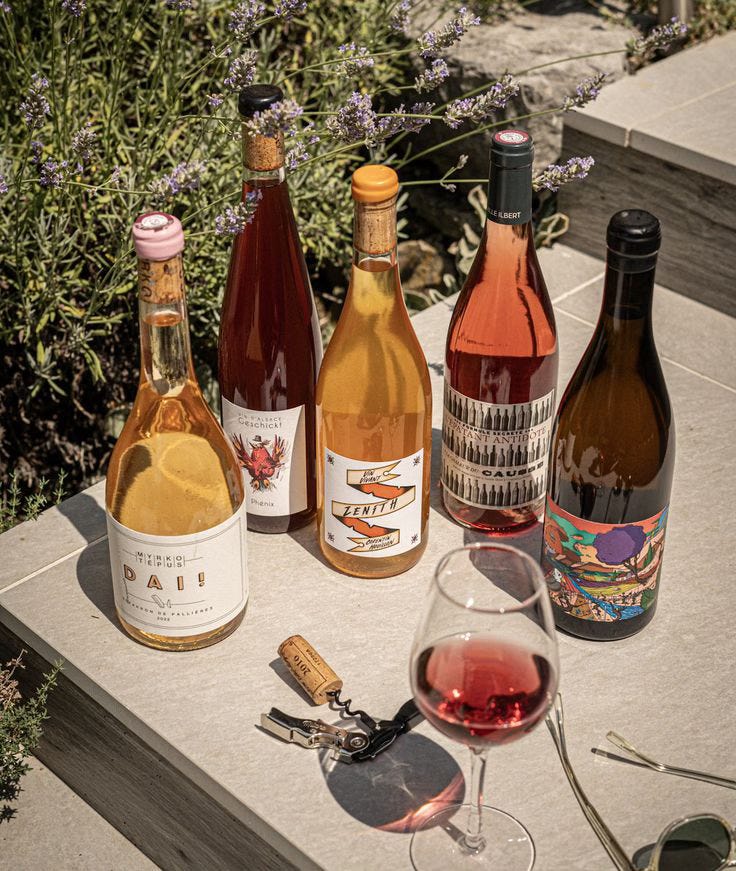
Bali makes you work for it (thanks, tax)
And here in Bali the feeling has to fight the math, hard. Indonesia taxes imported wine like a crime, duties reported around 90 percent, plus a 2015 rule that pushed some drinks up to 150 percent of their market price. You can carry in ONE litre per adult. So every bottle on a Seminyak list already climbed a giant wall of tax before it hit your table, which is exactly why wine here feels a little glam and a little out of reach. Meanwhile Bangkok cut its wine duties in 2024 and prices dropped up to 40 percent almost overnight, and boom, wine bars everywhere. It kind of blows my mind that one line in a tax code decides what's in your glass on a random Tuesday. Wine likes to act like it floats above money and paperwork. It never has. Even the word remembers, someone always carried the weight.
The natural wine bars, and the purity plot twist
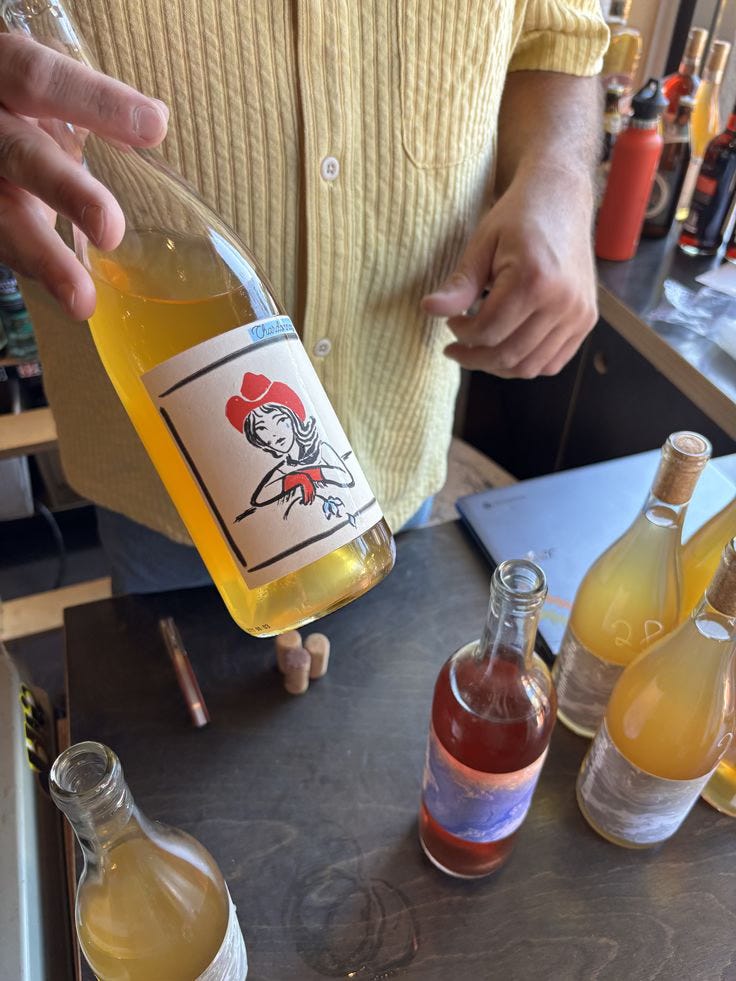
Which, ok, brings me to the bars I keep wandering into. The natural wine ones. Warm light, handwritten labels, bottles that taste a little wild and alive. And natural wine is basically the only part of the wine world still SPRINTING, growing over 20 percent a year while regular wine shrinks, and Asia Pacific is projected to be its fastest growing market. The idea is pretty and simple, grapes grown without the chemical stuff, fermented with the wild yeast that’s already there, nothing really added or taken away, barely any added sulfites.
But here’s the part that made me actually laugh out loud. The movement that’s all about purity and nothing added? Kind of invented by a marketing guy. The origin story is four winemakers in Beaujolais who ditched chemical farming in the 80s, and everyone calls them the Gang of Four, except that name was made up by an American importer named Kermit Lynch to SELL the wine, and the winemakers never even called themselves that. So the whole “nothing added” thing was, itself, kind of branded into existence. And their mentor, a guy named Jules Chauvet, wasn’t some barefoot hippie either, he was a trained chemist who studied fermentation and argued against dumping sulfur in wine before it was cool. The godfather of “wine with nothing in it” understood exactly what was in it. Iconic.
Oh and the purity has a catch the wine nerds still fight about. There’s no such thing as a zero sulfite wine, because fermentation makes sulfites on its own, so the honest labels can only say “no sulfites added,” not none. And then they argue endlessly about how much is too much. Which I kind of love. I walked into these bars for the vibes and the cute labels and turns out there’s this whole passionate messy argument underneath about what “real” even means. Makes the cool kids feel more human. They’re not sure either. They’re just further down the same road I’m on.
Will it last? Maybe not. But..
I’ll be real though, none of this is guaranteed to last. Seoul had its own natural wine craze and reportedly went full boom and bust in like a couple years. Bali’s moment could fade too, the laneway bars turning into smoothie spots by the time you read this, who knows. But the thing that actually sticks isn’t the trend. It’s the people quietly building real careers inside it. The Court has been teaching in Asia for over 19 years now, started in Hong Kong and Singapore, spread into Vietnam, Malaysia, India, China, and in 2025 handed out its 2,000th certificate in the region. Singapore made its first ever Master Sommelier, Mathias Camilleri, back in 2017. Somewhere in a restaurant near you a server who started out carrying plates is doing flashcards between shifts, climbing from the floor to the cellar. Which is honestly the same trip the word sommelier has been making for 700 years, from the one who carries the weight to the one you trust with the good bottle.
Am I gonna become a Master Sommelier? No. Let’s be so for real, the girl still can’t name 5 wines. But I think I finally get why I keep drifting into those bars, why I want so bad to be able to taste a glass and just tell. It was never really about the wine. It’s about the quiet unglamorous obsession underneath it, the years of studying and the insane tax and the fights about sulfites, all that invisible weight somebody carries so a stranger can sit in a garden cafe on a breezy afternoon, a little flu-ish, a little in love with the sun, and craving a glass of cold Chardonnay that was never part of her culture before.